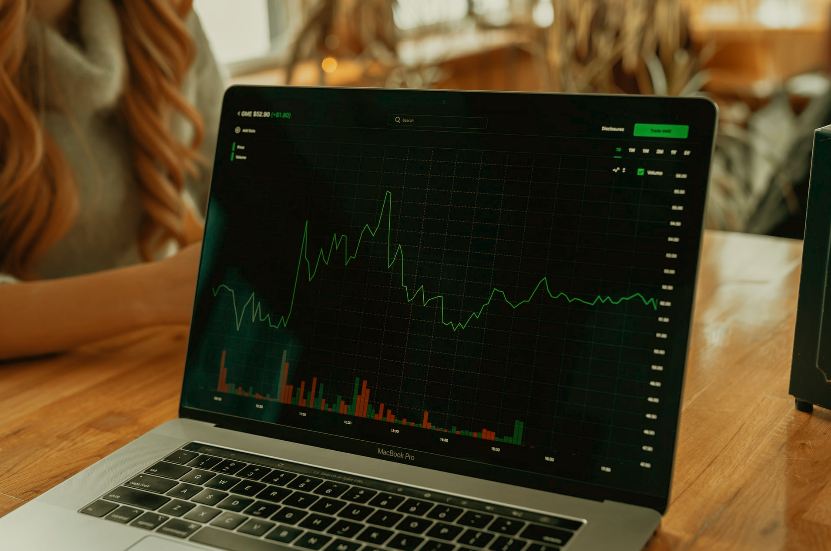
The stock market is where shares of publicly listed companies are bought and sold, and in India it runs through two exchanges: the National Stock Exchange (NSE) and the Bombay Stock Exchange (BSE). For a beginner, understanding the stock market means understanding three things: how the exchanges work, how to open the accounts needed to trade, and how to avoid the mistakes that cost new investors money in their first year.
Key Takeaways
- India’s stock market runs on two exchanges, NSE and BSE, both regulated by SEBI.
- You need a demat account and a trading account, opened through a SEBI-registered broker, before you can buy a single share.
- Sensex (30 BSE stocks) and Nifty 50 (50 NSE stocks) are index benchmarks, not the market itself – they show overall direction, not any one stock’s performance.
- NSE crossed roughly 26 crore registered investor accounts by mid-2026, but only around 4.5 crore accounts trade actively in a given month – most accounts are dormant.
- The biggest risk for beginners isn’t market volatility, it’s under-preparation: trading without a plan, without understanding fees, or without knowing how capital gains tax applies.
What Is the Stock Market and How Does It Work in India?
When a company wants to raise money from the public instead of only banks or private investors, it lists on a stock exchange through an Initial Public Offering (IPO). After listing, its shares trade between investors on the exchange every trading day. The price moves based on how much buyers are willing to pay and how much sellers are willing to accept – which in turn reflects the company’s earnings, growth outlook, broader economic conditions, and market sentiment.
India’s stock market is regulated by the Securities and Exchange Board of India (SEBI), which sets the rules for exchanges, brokers, listed companies, and market intermediaries. SEBI’s job is investor protection and fair, transparent markets – it’s the reason Indian brokers must be registered, disclose their charges, and follow strict rules around client money.
NSE vs BSE: India’s Two Stock Exchanges
Most Indian investors will interact with both exchanges without noticing much difference, since the same broker account lets you trade on either. The practical differences matter more for very small or illiquid stocks than for large, well-traded companies.
| Feature | NSE (National Stock Exchange) | BSE (Bombay Stock Exchange) |
|---|---|---|
| Founded | 1992 | 1875 (Asia’s oldest exchange) |
| Benchmark index | Nifty 50 | Sensex (30 stocks) |
| Trading volume | Higher – most liquid Indian exchange | Lower, though still significant |
| Number of listed companies | ~2,000+ | ~5,000+ (many small/inactive) |
| Best for | Most day-to-day trading and F&O | Some stocks listed only on BSE |
In practice, a beginner doesn’t choose between NSE and BSE directly – your broker routes the order to whichever exchange offers the best price, or to the one where a stock is listed if it isn’t available on both.
How to Start Investing in the Stock Market in India
Step 1: Complete Your KYC
Know Your Customer (KYC) verification – PAN card, Aadhaar, address proof, and a bank account in your name – is mandatory before any broker can open your accounts. Most brokers now complete this entirely online in under a day.
Step 2: Open a Demat and Trading Account
A demat account holds your shares electronically, similar to how a bank account holds money. A trading account is what you actually use to place buy and sell orders. Brokers bundle both together, and most discount brokers charge zero or low account-opening fees, though annual maintenance charges (AMC) usually apply to the demat account.
Step 3: Link Your Bank Account
Funds move between your bank and trading account for settlement, so you’ll link a bank account for UPI or net banking transfers before you can place your first trade.
Step 4: Place Your First Trade
Once funded, you can buy shares through your broker’s app or web platform. New investors are generally better off starting with well-established, liquid large-cap stocks or index funds rather than illiquid small-caps, simply because the price impact of buying and selling is lower and information about the company is easier to find.
Understanding Sensex and Nifty
Sensex and Nifty are index numbers, not tradeable assets by themselves (though you can invest in index funds or ETFs that track them). Sensex tracks 30 large, financially sound companies listed on the BSE; Nifty 50 tracks 50 companies across sectors listed on the NSE. When financial news says “the market is up 1% today,” it’s almost always referring to the movement in one of these two indices, used as a proxy for overall market health.
A rising index doesn’t mean every stock is rising, and a falling index doesn’t mean every stock is falling – individual stocks can move in the opposite direction of the broader index based on company-specific news.
Who Participates in the Indian Stock Market?
- Retail investors – individuals investing their own money, a fast-growing segment as more first-time investors open demat accounts each year.
- Foreign Portfolio Investors (FPIs) – overseas institutions investing in Indian markets; their buying and selling activity is closely watched because of its size.
- Domestic Institutional Investors (DIIs) – Indian mutual funds, insurance companies, and pension funds.
- Brokers – SEBI-registered intermediaries who execute trades on your behalf, ranging from full-service brokers to discount trading apps.
- SEBI – the regulator overseeing all of the above.
Segments of the Stock Market
Beginners usually start in the cash/equity segment – simply buying and holding shares. As experience grows, some traders move into the futures and options (F&O) segment, which involves derivative contracts and carries substantially higher risk and complexity; this deserves its own dedicated learning before attempting it. A separate entry point is the IPO market, where investors apply for shares of a company before it starts trading publicly.
Common Mistakes Beginners Make
| Mistake | Why It Hurts |
|---|---|
| Investing without an emergency fund first | Forces panic-selling at a loss when cash is needed suddenly |
| Chasing stock tips from social media or forwarded messages | Most “hot tips” are unverified, sometimes part of pump-and-dump schemes |
| Ignoring brokerage and transaction charges | Frequent small trades can erode returns through fees alone |
| Not diversifying across sectors | Concentrated bets amplify losses when one sector underperforms |
| Treating trading and long-term investing as the same activity | Different time horizons need different strategies and risk management |
Stock Market Taxation Basics
Profits from selling shares are taxed as capital gains in India. Gains on listed shares held for more than 12 months are treated as long-term capital gains (LTCG); gains on shares sold within 12 months are short-term capital gains (STCG), typically taxed at a higher rate. A Securities Transaction Tax (STT) also applies automatically on every trade, deducted by your broker at the time of the transaction. Tax rules and rates are set by the government and can change in the annual Union Budget, so it’s worth checking the current rate each financial year rather than assuming it stays fixed.
Frequently Asked Questions
How much money do I need to start investing in the stock market in India?
There’s no legal minimum – you can buy a single share of many companies for a few hundred rupees. What matters more than the starting amount is consistency and understanding what you’re buying.
Is the stock market safe for beginners?
The stock market itself is a regulated, legitimate system, but individual stock prices can be volatile and go down as well as up. “Safety” comes from how you invest – diversifying, avoiding leverage you don’t understand, and not investing money you’ll need in the short term – not from the market being inherently risk-free.
What’s the difference between a demat account and a trading account?
A demat account stores your shares electronically. A trading account is used to place buy and sell orders. You need both, and brokers typically open them together as a linked pair.
Can I invest in the stock market without a broker?
No. All stock market transactions in India must go through a SEBI-registered broker, whether that’s a traditional full-service firm or a discount trading app.
What is the minimum age to open a demat account in India?
You must generally be 18 to open a demat account in your own name. Minors can have accounts opened on their behalf by a parent or legal guardian, operated by the guardian until the minor turns 18.
How is the stock market different from mutual funds?
Buying stocks directly means picking and managing individual companies yourself. Mutual funds pool money from many investors and are managed by a professional fund manager who picks the underlying stocks – a common starting point for beginners who want market exposure without picking individual stocks themselves.
Getting Started the Right Way
The stock market rewards patience and preparation more than quick decisions. Before your first trade, it’s worth spending time understanding order types, how brokerage and other charges work, and how taxation applies to your specific holding period – each of those topics affects your actual returns more than most beginners initially expect.
For a deeper look at how India’s exchanges and brokers work, see our Stock Trading section, or head back to the Trade Day homepage for the latest on forex, crypto, and options trading.
This article is for informational and educational purposes only and does not constitute financial, investment, or trading advice. Trading in securities, currencies, derivatives, and cryptocurrencies carries a high level of risk. Trade Day is not a registered investment advisor and has no affiliation with any broker, exchange, or platform mentioned unless explicitly stated. Do your own research and consult a licensed financial advisor before making financial decisions.